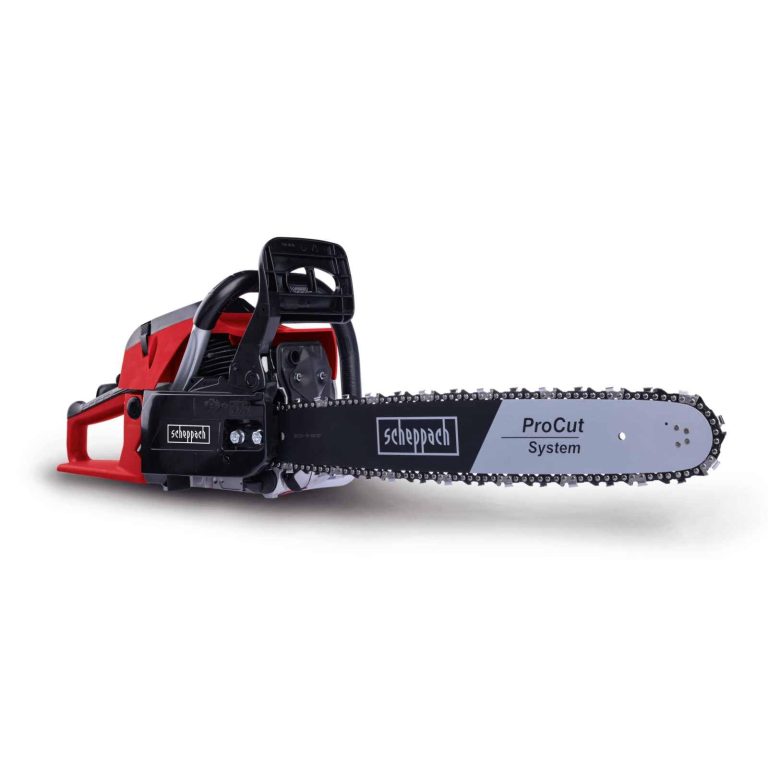
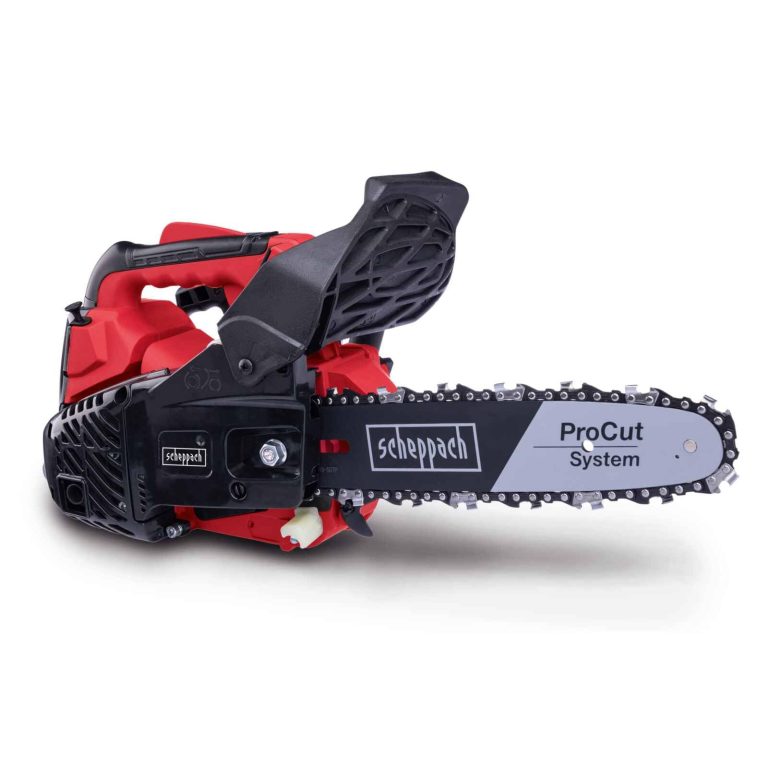
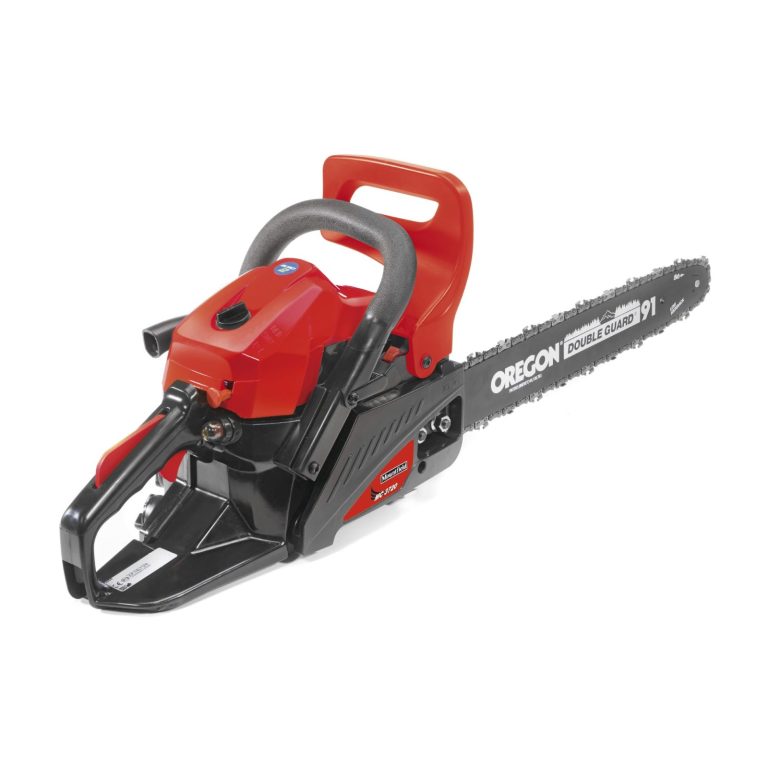
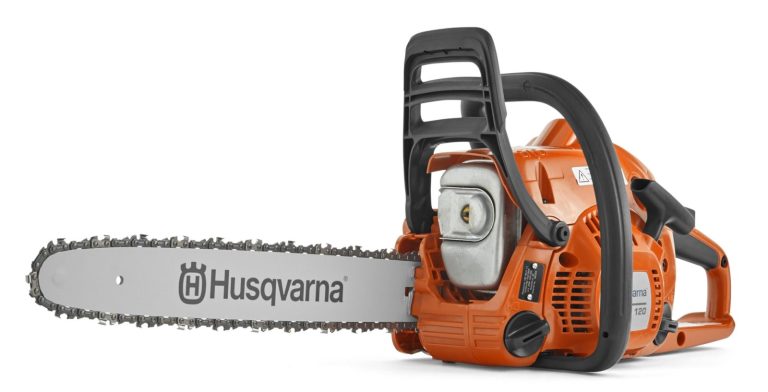
Petrol is still what most people mean by a chainsaw. It cuts for as long as you keep mixing fuel, it does not care how far you are from a plug, and above about 40 cm of bar it is the only realistic choice. We have 107 petrol models on file, from 25 cm one-handed pruning saws to the 6.4 kW machines used for milling.
Start here if you are not sure what size you need:
One honest warning about this market. Petrol chainsaws attract more no-name imports than any other garden tool, often sold as "62cc 20 inch" with no manufacturer behind them and no parts supply. Those saws appear in this list because they are on sale, not because we recommend them. The brands worth your money are the ones with a UK parts and service network: Stihl, Husqvarna, Mitox, Einhell and Hyundai.
Petrol chainsaws by bar length
Bar length decides what the saw can cut in one pass, and it is the first number to fix. Everything below is current stock we hold a review for, sorted shortest bar first.
Browse the rest by size: 12 inch, 14 inch, 16 inch, 18 inch and 20 inch.
How much saw do you actually need
The working rule is that the bar wants to be about 5 cm longer than the thickest log you cut regularly. A 35 cm bar handles 30 cm logs comfortably, which covers most firewood in this country. Going longer is not free: a long bar on a small engine cuts slowly, drags the chain speed down and wears the sprocket, and every extra centimetre is extra weight at the end of your arms.
Engine size tracks bar length. Roughly, 30 to 40 cc suits 30 to 35 cm bars and occasional use, 40 to 50 cc suits 40 cm bars and regular firewood, and above 50 cc you are into felling and professional saws. Weight climbs with it, from about 4 kg for a small homeowner saw to over 9 kg for the biggest machines before you add fuel and a bar.
Petrol against battery, honestly
Battery saws have taken over the small end of this market. For pruning, garden tidying and logs up to about 20 cm, a cordless saw is quieter, starts instantly, needs no fuel mixing and can be put away wet without a second thought. Petrol wins on sustained cutting, on anything above 40 cm of bar, and on jobs where swapping batteries every twenty minutes is not practical.
The honest split: if your saw lives in a shed and comes out six times a year for garden work, battery is probably the better tool. If you cut your own firewood, fell trees or work away from power, petrol still earns its keep.
Fuel, oil and what a petrol saw costs to run
Nearly all modern petrol chainsaws run a 50:1 two-stroke mix, which is 100 ml of two-stroke oil in 5 litres of fresh unleaded. A few budget and older machines specify 40:1, so check the manual rather than assuming. Mixed fuel degrades, so make up what you will use within a few weeks, or buy premixed alkylate fuel, which stores for years, smells far less and is kinder to the carburettor on a saw that sits all winter.
Bar and chain oil is the other consumable, and a saw in steady use gets through roughly as much chain oil as fuel. Never run the oiler dry: a chain running on a dry bar will blue the rails and ruin both. Budget for a spare chain, a file or 2-in-1 sharpener, and an annual service of air filter, spark plug and sprocket.
Safety kit is not optional
A petrol saw is the most dangerous tool most households own. For ground work the standard kit is Class 1 Type A chainsaw trousers, chainsaw boots, a helmet with visor and ear defence, and gloves. Every saw here has a chain brake, but a brake only helps if the saw is held properly in the first place, with the left thumb wrapped under the front handle.
No licence is needed to use a chainsaw on your own property in the UK. If you cut for an employer, or for payment, you need recognised training and certification, and your insurer will ask for it.
Petrol chainsaw FAQs
What fuel does a petrol chainsaw use?
Fresh unleaded of at least 95 RON, mixed with two-stroke oil. Most modern saws use 50:1, which is 100 ml of oil in 5 litres of petrol, though some budget and older machines ask for 40:1 (125 ml in 5 litres). Check the cap or the manual before you mix. Never run neat petrol, even briefly: there is no separate oil supply for the engine and it will seize.
How do you start a petrol chainsaw?
Put the saw on flat ground with the bar clear, engage the chain brake, and press the decompression valve if it has one. Set the choke to full for a cold start, hold the saw down with a foot through the rear handle, and pull the cord in short brisk pulls. When it coughs, push the choke to half or the run position and pull again. Once it idles, blip the throttle, then release the brake. If it floods, remove the plug, dry it, pull the cord several times with the choke off and try again.
How tight should a chainsaw chain be?
Tight enough that the drive links stay in the bar groove when you pull the chain away from the bar, loose enough that you can still pull it round the bar by hand with a glove on. On the underside it should sit against the rail with no sag. Check it cold, then again after the first few cuts, because a new chain stretches as it beds in. A chain that keeps coming off is usually too loose, or the bar rails are worn and spreading.
How do you measure a chainsaw bar?
Measure from the front of the saw body, where the bar emerges, to the tip, then round up to the nearest standard size: 30, 35, 40, 45 or 50 cm (12, 14, 16, 18 or 20 inches). That is the cutting length, and it is the number quoted here and on the packaging. The full bar is longer, because part of it is clamped inside the saw. To buy a chain you need three numbers rather than one: the length, the pitch and the gauge, plus the drive link count, which is usually stamped on the bar.
How long does a chainsaw chain last?
A chain can be sharpened five to ten times before the cutters are filed back to the wear mark, which for a homeowner is often several seasons. What kills chains early is dirt: one touch of soil, a stone or a fence staple dulls every cutter at once. Keep a spare chain so a dull one does not end the job, and replace the drive sprocket about every two chains.
Is a petrol or battery chainsaw better?
For logs up to about 20 cm and a few hours of garden work a year, battery is the better tool: no fuel mixing, instant starting, far less noise and no fumes. For firewood, felling, long cutting sessions or anything that needs a bar over 40 cm, petrol still wins on sustained power and does not stop for a recharge. Plenty of people end up with both, a small battery saw for pruning and a petrol saw for the log pile.
Do you need a licence to use a chainsaw in the UK?
Not for private use on your own property. If you use a chainsaw at work, or for payment, you must be trained and certificated to a recognised standard, and that is a legal requirement on the employer rather than a formality. Insurers ask for proof of training after an accident, and domestic policies rarely cover tree felling. Whatever the law says, the training is worth doing: most chainsaw injuries are to the left hand and left leg, and both are avoidable.
Are cheap petrol chainsaws worth buying?
They cut wood on day one. The problems come later: no UK parts supply, carburettors that will not hold a tune, bars and chains in sizes nobody stocks, and no dealer to take it to. If the saw is for occasional light work and you are happy treating it as disposable, a budget machine is a reasonable gamble. For anything you depend on, buy a brand with a parts network, even second hand.