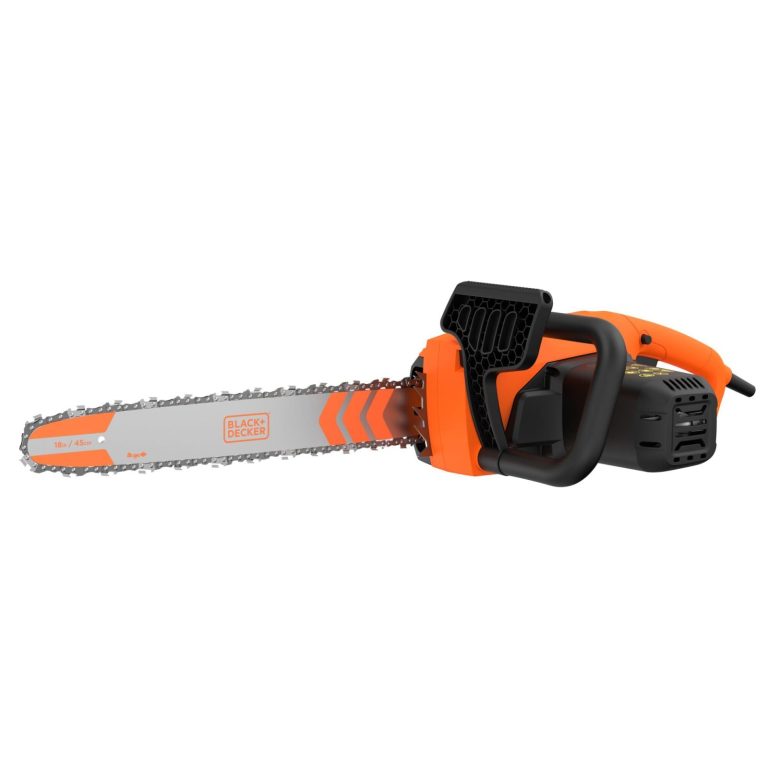
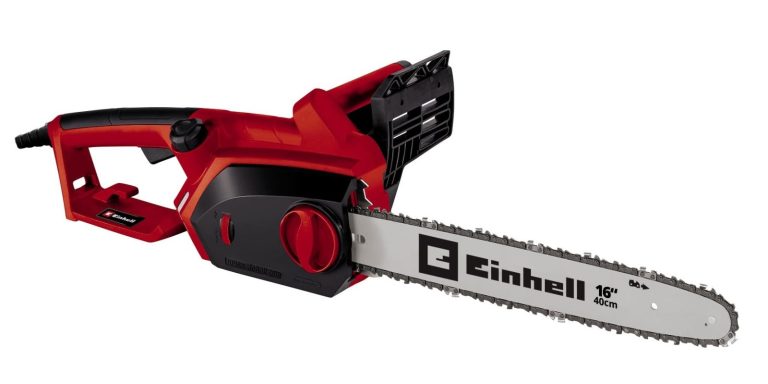
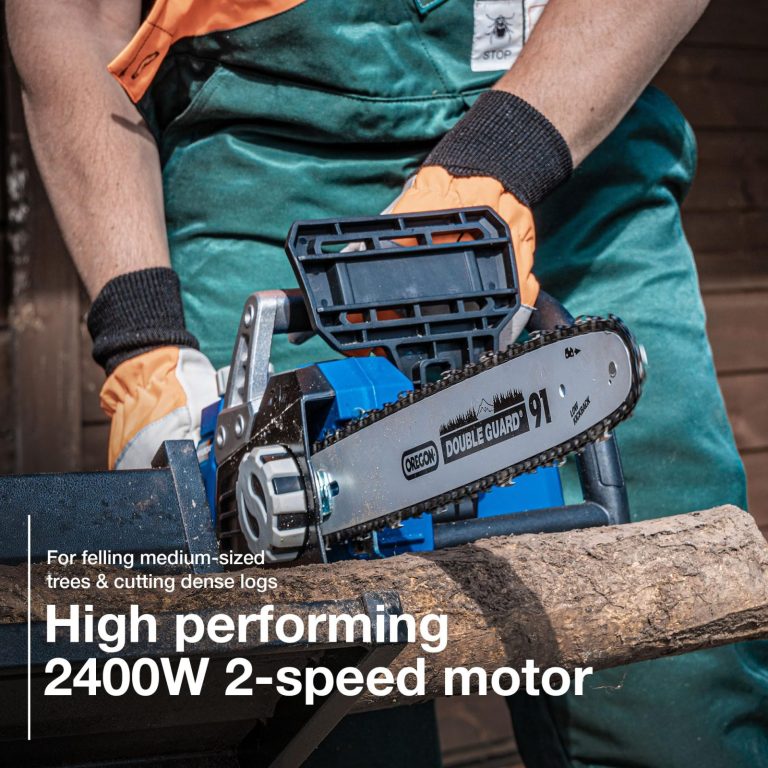
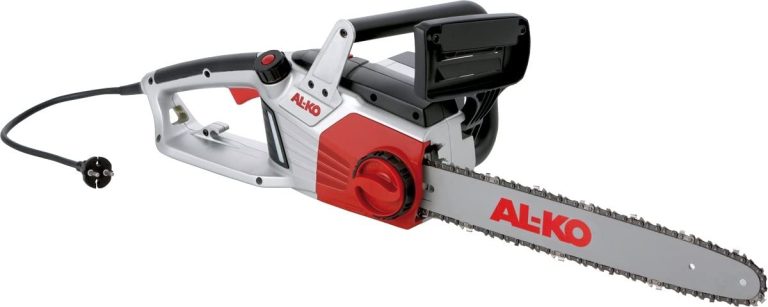
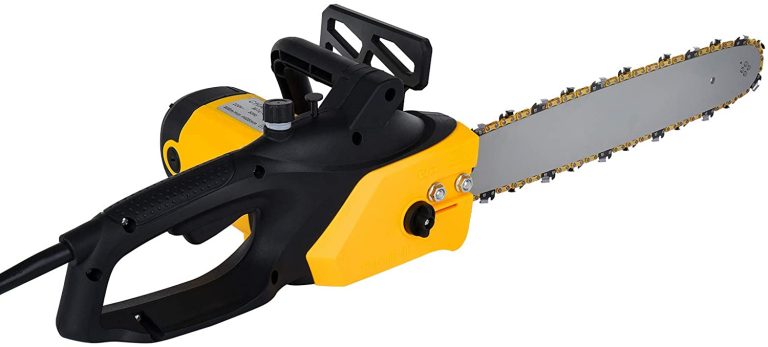
A corded chainsaw is the cheapest way to get real cutting power. Plug it in and it will run all day at full output, with no battery to flatten and no fuel to mix. We have 27 mains models on file, mostly between 1,800W and 2,400W.
The trade is mobility. You are tied to an extension lead, which rules out the far end of a long garden and makes work on a slope awkward. If that matters more than price, look at cordless saws instead.
Corded chainsaws by bar length
Current mains saws we hold a review for, shortest bar first.
What the wattage tells you
Mains chainsaws are sold on watts, and the range is narrow: most sit between 1,800W and 2,400W because that is what a 13A domestic socket will comfortably supply. More watts means more torque before the motor slows in a cut, so a 2,400W saw pulls a 40 cm bar through seasoned hardwood where an 1,800W saw starts to labour.
For comparison, a 2,000W mains saw is roughly in the same cutting league as a 36V to 40V battery saw, and costs a good deal less. What it cannot match is a mid-size petrol saw, which produces two to three times the power and is not limited by a plug.
Extension leads and RCDs
The lead matters more than people think. Use a heavy-duty extension rated for the saw, unwound fully from the reel, because a coiled cable under load heats up. Thin leads cause voltage drop, which makes the motor work harder and run hot.
Always plug into an RCD, either a socket with one built in or a plug-in adaptor. Cutting through your own cable is the classic corded chainsaw accident, and an RCD is what stands between that and a serious shock. Run the lead over your shoulder and away behind you, keep it on the opposite side to the bar, and never cut above shoulder height where the cable ends up in front of the cut.
Living with a corded saw
The maintenance is the easy part. There is no fuel to go stale, no carburettor to gum up and no annual service, so a corded saw that sits all winter still works in spring, which is more than can be said for a neglected petrol saw.
What it does still need is bar and chain oil in the reservoir, correct chain tension and a sharp chain. Most mains saws have a tool-free tensioner and a sight glass for the oil, so checking both takes seconds. Keep the motor vents clear of sawdust, since that is the usual cause of an electric saw overheating.
Who should buy one
Corded suits anyone whose cutting happens within a lead of the house: processing a log delivery, cutting pallets and offcuts, tidying a garden, or trimming fallen branches after a storm. It is also the quietest option, which matters on a terraced street on a Sunday.
It does not suit woodland work, allotments without power, or anyone who needs to carry a saw any distance. For that, see cordless or petrol.
Corded chainsaw FAQs
How powerful does a corded chainsaw need to be?
For garden work and branches, 1,800W with a 35 cm bar is enough. For regular firewood and 40 cm bars, look for 2,000W to 2,400W. Above that you run into the limits of a 13A socket, which is why mains saws stop at around 2,400W. If you need more cutting power than that, the answer is petrol rather than a bigger plug.
What extension lead should I use with a chainsaw?
A heavy-duty lead rated for at least the saw's current draw, with the cable fully unwound from the reel. A coiled lead under load heats up and can melt, and a thin lead drops voltage so the motor labours. Plug into an RCD, keep the lead behind you and on the opposite side to the bar, and check it for damage before each use.
Does a corded chainsaw need oil?
Yes. There is no fuel and no engine oil, but the bar and chain oil reservoir must be kept topped up with proper bar and chain oil. Most corded saws have a window to check the level. A dry bar overheats, stretches the chain and ruins the rails, usually within one session.
Is a corded chainsaw better than a battery one?
For power per pound spent, yes: a 2,000W mains saw cuts like a mid-range battery saw costing considerably more, and it never stops to charge. For convenience, no: the cable limits where you can work and is one more hazard to manage. Pick corded when the wood comes to you, battery when you go to the wood.
Can I use a corded chainsaw in the rain?
No. Mains tools and wet conditions are a bad combination, and the manuals say so explicitly. Wet wood is also more likely to bind the chain. If you need to cut in poor weather, a petrol or battery saw is the safer choice, and even then an RCD on any mains equipment nearby is sensible.
Why does my corded chainsaw keep cutting out?
Three usual causes. An undersized or coiled extension lead causing voltage drop; blocked motor vents making the thermal cut-out trip; or a blunt chain forcing the motor to work beyond its rating. Clear the vents of sawdust, use a heavier lead fully unwound, and sharpen the chain. If it still trips, the cut-out may be doing its job on a failing motor.