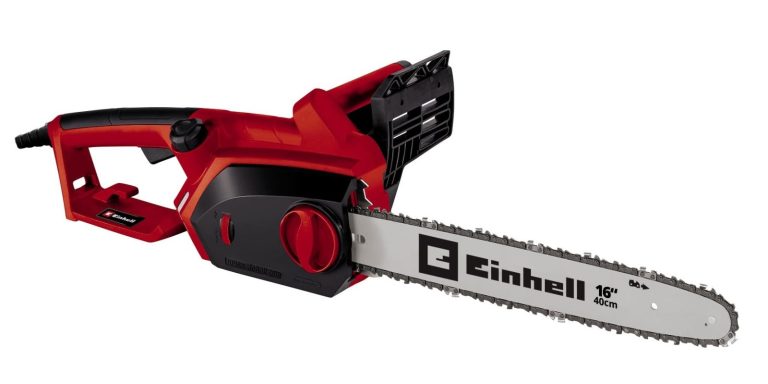
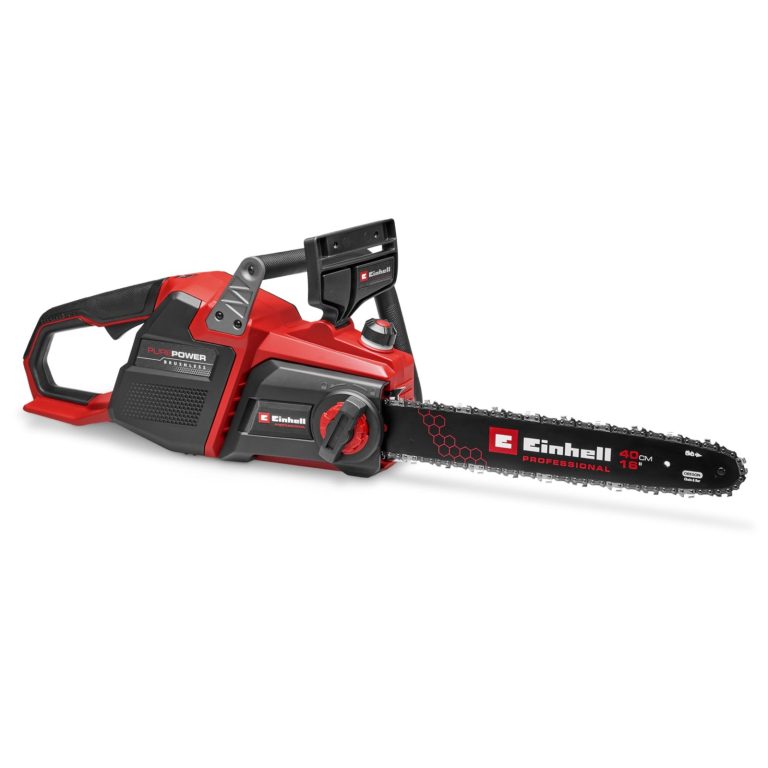
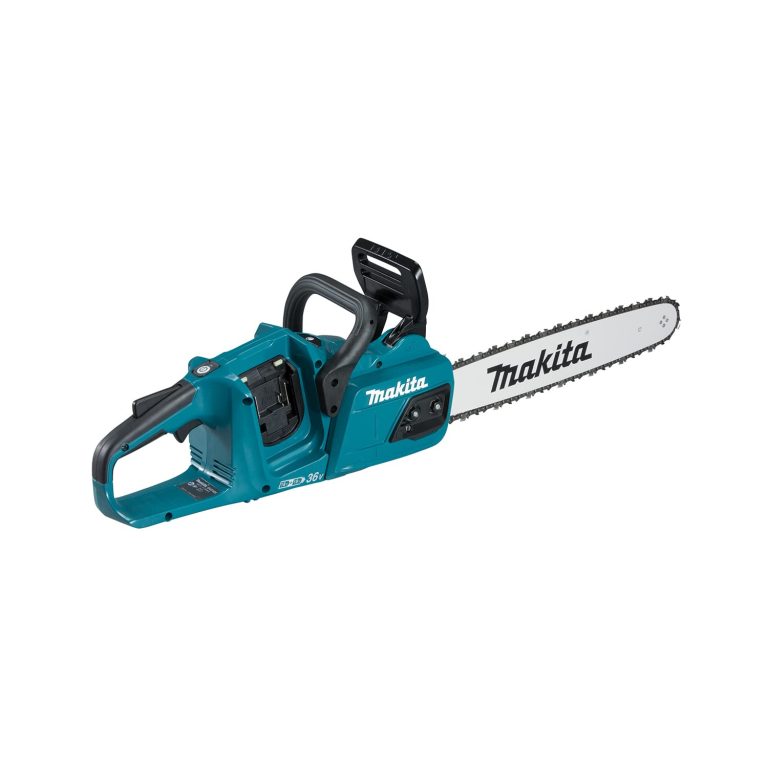
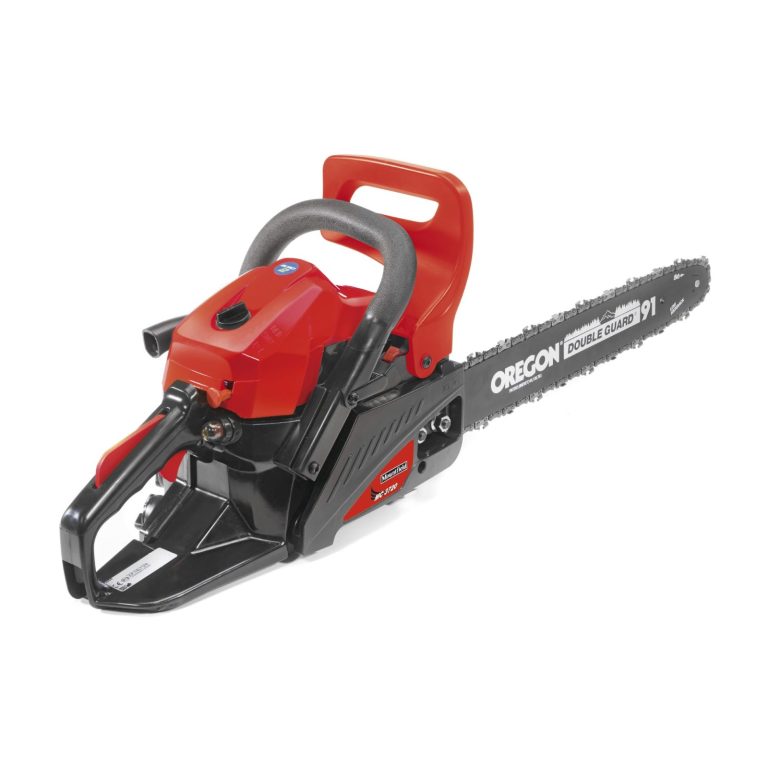
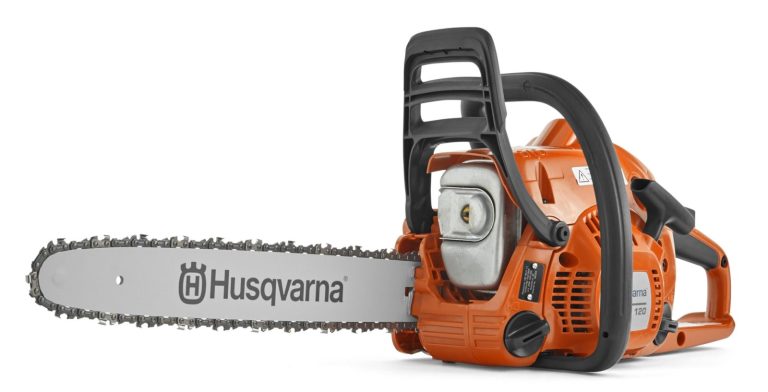
Sixteen inches is the firewood size. A 40 cm bar takes most delivered logs in one pass, it is the longest bar mains saws usefully carry, and it is where mid-range petrol saws and the bigger battery platforms meet. We hold 47 models with a 40 cm (16 inch) bar.
- What it cuts: logs and trunks up to about 35 cm in a single pass.
- Power it needs: 40 to 50 cc on petrol, 2,000W to 2,400W on mains, 40V or more on battery.
- Who it suits: anyone processing firewood in quantity, clearing fallen trees, or wanting one saw that will not run out of bar.
For pruning and light garden work this is more saw than you need, and the weight shows after an hour. For felling mature trees, 18 or 20 inches gives you a bar longer than the trunk, which matters for an accurate hinge.
16 inch chainsaws compared
Current models on file at this bar length, across petrol, battery and mains.
How much wood a 16 inch bar really handles
The usable cutting length is the number quoted, measured from the saw body to the bar tip, so a 40 cm bar cuts a log of about 40 cm in one pass. The practical working rule is to choose a bar around 5 cm longer than the thickest wood you cut regularly, which puts this size at its best on timber up to roughly 35 cm.
Thicker logs are not impossible: cutting from both sides doubles the effective capacity. It is slower, and on a felling cut it makes an accurate hinge harder, which is why felling wants a bar longer than the trunk rather than a technique that works around a short one.
Matching the engine or motor to the bar
At 40 cm the engine matters. On petrol, 40 to 50 cc is the sensible range, which covers mid-range saws such as the Stihl MS 231 and MS 251 and the Husqvarna 130 and 435. On mains, this is the longest bar worth fitting, and it wants 2,000W to 2,400W, which is the practical ceiling for a 13A socket. On battery, 40V upwards: a 36V saw will drive a 40 cm bar but will empty packs quickly in hardwood.
An underpowered saw with a long bar is the most common bad buy in this market: it cuts slowly, loses chain speed in the cut, and wears the drive sprocket. Manufacturers list permitted bar lengths per model for exactly this reason, and fitting a longer bar than the list allows usually voids the guarantee.
Chains and files for this size
Most 40 cm bars run 0.325 inch chain on petrol saws, filed with a 4.8 mm round file, or 3/8 inch low-profile on mains and battery saws, filed with 4.0 mm. Gauge is usually 1.3 mm. This is the size where keeping a sharp spare chain pays for itself, because a dull chain on a 40 cm bar makes a saw feel badly underpowered.
Three numbers buy a chain: the cutting length, the pitch and the gauge, plus the drive link count. All of them are usually stamped on the bar near the saw body. Chain length is not interchangeable between saws of the same bar length, because drive link counts differ.
One size up, one size down
Step down to 14 inch for a lighter saw that still covers most garden work. Step up to 18 inch or 20 inch if you fell trees rather than process logs.
If you are still deciding on power rather than length, compare the petrol, cordless and corded ranges.
16 inch chainsaw FAQs
Is a 16 inch chainsaw good for firewood?
It is the size most people should buy for firewood. A 40 cm bar takes logs up to about 35 cm in one pass, which covers nearly all delivered timber and most felled garden trees, and it is still light enough to use for a couple of hours. Longer bars mainly add weight unless you are felling.
What engine size do you need for a 16 inch bar?
On petrol, 40 to 50 cc. Below about 40 cc the saw will pull a 40 cm bar but cuts slowly and labours in hardwood, which wears the clutch and sprocket. On mains, 2,000W to 2,400W. On battery, a 40V or larger platform, or a 36V saw accepting that runtime will be short.
How do you measure a chainsaw bar?
Measure from the point where the bar leaves the saw body to the tip, then round to the nearest standard size. That gives the cutting length, which is what "16 inch" means here and on the packaging. The whole bar is longer, because part of it is clamped inside the saw, so measuring the bar on its own gives a number that does not match anything you can buy. A 16 inch bar is 40 cm.
Can a 16 inch chainsaw fell a tree?
Yes, up to roughly 35 cm of trunk, which is a decent-sized tree. Beyond that you are cutting from both sides, which makes it much harder to leave an accurate hinge, and the hinge is what controls where the tree falls. Felling near buildings, roads or power lines is a job for someone trained and insured, whatever bar you own.
How tight should the chain be?
Tight enough that the drive links stay in the bar groove when you pull the chain away from the bar, loose enough to turn it round the bar by hand with a glove on. Check it cold, and again after the first few cuts with a new chain, because chains stretch as they bed in. A chain that keeps coming off is usually too loose or running on worn bar rails.