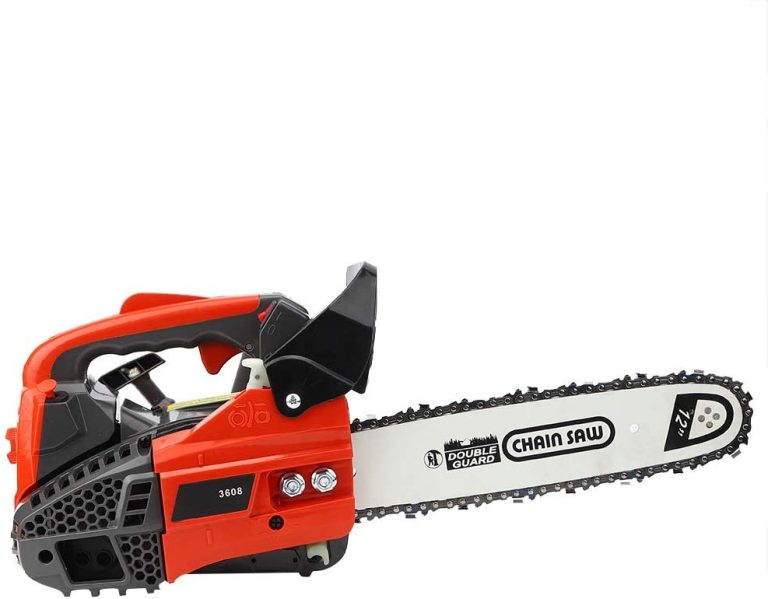
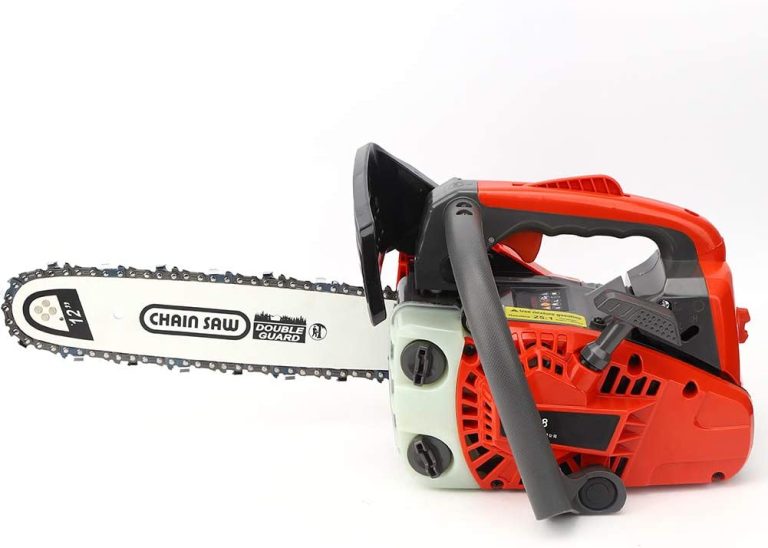
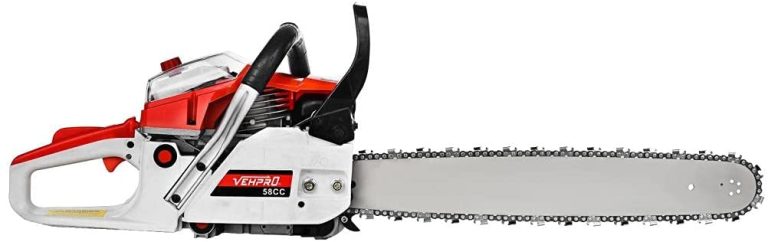
Every saw in this section runs on a mix of petrol and two-stroke oil. Getting that mix right, and keeping it fresh, is most of what separates a saw that starts on the second pull from one that goes back to the dealer every spring. There are 37 models in this section, 8 of them current.
- Best for: anyone cutting away from power, or cutting for long enough that batteries become the bottleneck.
- Watch out for: fuel left in the saw over winter. It is the single most common reason a petrol chainsaw will not start.
This is a narrower cut of the full petrol listing, which holds every model of this type we have on file.
Fuel Powered Chainsaws compared
Current models in this section, shortest bar first.
Getting the mix right
Most modern saws run 50:1, which is 100 ml of two-stroke oil in 5 litres of fresh unleaded. Some budget and older machines specify 40:1, which is 125 ml in 5 litres. The ratio is printed on the filler cap or in the manual, and guessing is how engines get seized.
Measure rather than eyeball it, mix in the can and not in the saw, and shake before each fill. Too little oil seizes the engine; too much fouls the plug and smokes.
Why fuel goes off, and what to do about it
Pump petrol in the UK contains ethanol, which absorbs water and attacks fuel lines, primer bulbs and carburettor diaphragms. Mixed two-stroke fuel starts degrading within weeks, and a saw left standing with it in the tank over winter usually needs a carburettor clean before it will run.
Two fixes. Mix only what you will use within a month, and either run the saw dry or drain it before storage. Or buy premixed alkylate fuel, which stores for years, smells far less and burns much cleaner. It costs several times as much per litre and is still worth it for a saw used a few times a year.
Starting one that has stood
Fresh fuel first, then the usual sequence: saw on flat ground, chain brake on, decompression valve pressed if fitted, choke fully out, foot through the rear handle, short brisk pulls on the cord. When it coughs, push the choke to half or run and pull again.
If it floods, take the plug out, dry it, pull the cord several times with the choke off to clear the cylinder, refit and try again. If it still will not run after fresh fuel and a clean plug, the carburettor diaphragms have usually perished and it is a service job.
Where to go next
For the complete range of this type, see the full petrol listing. To browse by cutting length instead, try 12 inch, 14 inch or 16 inch.
Fuel Powered Chainsaws FAQs
What ratio of oil to petrol does a chainsaw need?
50:1 on most modern saws, which is 100 ml of two-stroke oil in 5 litres of petrol. Some older and budget machines specify 40:1, which is 125 ml in 5 litres. Check the filler cap or the manual for your model: running too little oil will seize the engine.
How long does mixed chainsaw fuel last?
A few weeks at best in a sealed can, less in a part-full one. Ethanol in pump petrol absorbs water and the mix separates and degrades. Premixed alkylate fuel stores for years unopened and is the sensible choice if the saw only comes out occasionally.
Why will my chainsaw not start after winter?
Almost always stale fuel. Drain the tank, fit a fresh plug, fill with newly mixed fuel and try again. If it still will not run, the carburettor diaphragms have perished, which is a straightforward service job but not usually a roadside fix. Next autumn, run the saw dry before storing it.
Can I use ordinary two-stroke oil?
Use an oil rated for air-cooled two-stroke engines, which chainsaw oils are. Outboard motor oil is formulated for water-cooled engines and runs too cool for a chainsaw. Manufacturer-branded oils are matched to their engines and often tie in to an extended warranty, which is worth having on a new saw.