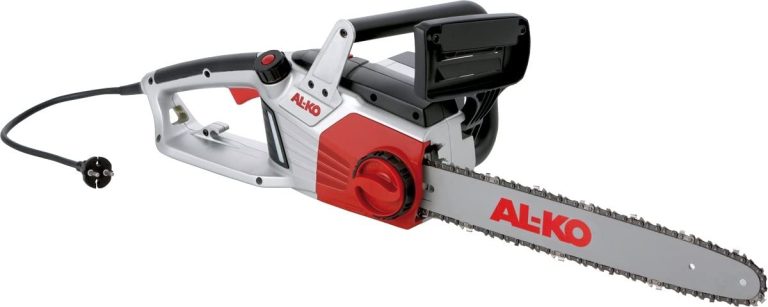
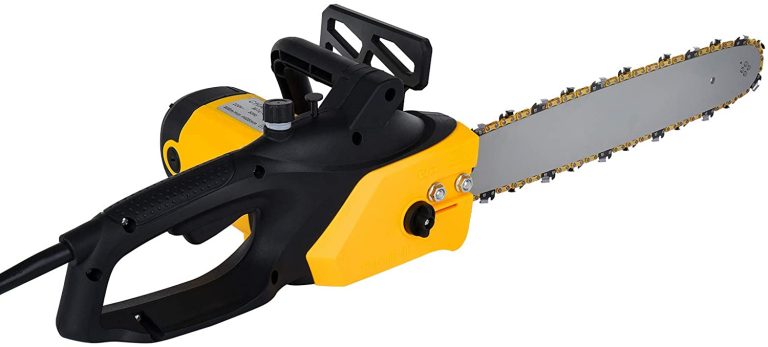
A corded chainsaw buys the most cutting power per pound of anything here. Plug it in and it runs at full output all day, with no fuel to mix and no battery to flatten. There are 32 models in this section, 16 of them current.
- Best for: processing a log delivery, cutting pallets and offcuts, and any work within reach of a socket.
- Watch out for: the cable. It limits where you can work, it has to be kept behind you and out of the cut, and it should always be plugged into an RCD.
This is a narrower cut of the corded chainsaw listing, which holds every model of this type we have on file.
Corded Chainsaws compared
Current models in this section, shortest bar first.
How much power you need
Mains saws cluster between 1,800W and 2,400W because that is what a 13A socket will supply. At 1,800W with a 35 cm bar you have enough for branches and garden logs. At 2,000W to 2,400W with a 40 cm bar you can process firewood steadily without the motor labouring.
A 2,000W mains saw is roughly the equal of a 36V to 40V battery saw in cutting ability, and costs a good deal less. What it will not match is a mid-size petrol saw, which produces two to three times the power.
Cable safety, properly
Cutting through your own extension lead is the classic corded chainsaw accident. Run the lead over your shoulder and away behind you, on the opposite side to the bar, and never cut above shoulder height where the cable ends up in front of the chain.
Use a heavy-duty lead rated for the saw and unwind it fully from the reel, because a coiled cable under load heats up. Plug into an RCD, either a socket with one built in or a plug-in adaptor. And do not use a mains saw in the wet.
Living with one
There is no fuel to go stale and no carburettor to gum up, so a corded saw that sits all winter still works in spring. What it does need is bar and chain oil in the reservoir, correct chain tension and a sharp chain.
Keep the motor vents clear of sawdust. A blocked vent is the usual reason an electric saw overheats and trips its thermal cut-out mid-job.
Where to go next
For the complete range of this type, see the corded chainsaw listing. To browse by cutting length instead, try 12 inch, 14 inch or 16 inch.
Corded Chainsaws FAQs
How powerful should a corded chainsaw be?
1,800W with a 35 cm bar covers garden work and branches. For firewood and 40 cm bars, look for 2,000W to 2,400W, which is about the ceiling for a domestic socket. If you need more than that, the answer is a petrol saw rather than a bigger plug.
Is a corded chainsaw better than a battery one?
For cutting power per pound, yes, and it never stops to charge. For convenience, no: the cable limits where you can work. The useful rule is that if the wood comes to you, buy corded, and if you go to the wood, buy cordless.
What extension lead do I need?
A heavy-duty lead rated for the saw's current, fully unwound from the reel. A coiled lead under load heats up, and a thin lead drops voltage so the motor labours. Plug into an RCD and check the cable for damage before each use.
Does a corded chainsaw need oil?
Yes, bar and chain oil. There is no engine oil and no fuel mix, but the chain runs on a steel bar at speed and must be lubricated. Most corded saws have a sight window for the level. A dry bar overheats and ruins the chain within one session.